
These limitations highlight the necessity of using the accounting equation in conjunction with other financial analyses to paint a fuller picture of a company’s economic landscape. Additionally, it doesn’t directly measure profitability or efficiency, requiring supplemental financial statements like income statements and cash flow reports for comprehensive insights. Moreover, error detection is straightforward with the accounting equation.

Assets = Liabilities + Owners’ Equity
However, the accounting equation treats all values at face value regardless of when they are realized. This becomes problematic when dealing with long-term assets or liabilities. The Accounting Equation is a vital formula to understand and consider when it comes to the financial health of your business. The accounting equation is a factor in almost every aspect of your business accounting. The revenue a company shareholder can claim after debts have been paid is Shareholder Equity. This expanded equation is crucial for corporations as it allows a deeper analysis of financial results, showing how operations impact shareholder equity and profitability.
- In conclusion, the accounting equation serves as a cornerstone of financial understanding.
- These are usually incurred during daily business activities, such as purchasing inventory on credit or running operations.
- You should consider our materials to be an introduction to selected accounting and bookkeeping topics (with complexities likely omitted).
- Understanding the accounting equation is easier when you see it in action.
- It is central to understanding a key financial statement known as the balance sheet (sometimes called the statement of financial position).
- Additionally, some individuals may not fully appreciate how equity functions within the equation.
Single-entry vs. double-entry bookkeeping system
For example, although the land cost $125,000, Edelweiss Corporation’s balance sheet does not report its current worth. Similarly, the business may have unrecorded resources, such as a trade secret or a brand name that allows it to earn extraordinary profits. Alternatively, Edelweiss may be facing business risks or pending litigation that could limit its value. Consideration should be given to these important non-financial statement valuation issues if contemplating purchasing an investment in Edelweiss stock. This observation tells us that accounting statements are important in investment and credit decisions, but they are not the sole source of information for making investment and credit decisions. In essence, the accounting equation connects the resources a business has at its disposal with the claims against those resources.
What is the Expanded Accounting Equation?
It ensures a company’s books are always balanced and provides a framework for financial reporting and analysis. Insurance Expense, Wages Expense, Advertising Expense, Interest Expense are expenses matched with the period of time in the heading of the income statement. Under the accrual basis of accounting, the matching is NOT based on the date that the expenses are paid. The contra owner’s equity account used to record the current year’s withdrawals of business assets by the sole proprietor for personal use. It will be closed at the end of the year to the owner’s capital account. That part of the accounting system which contains the balance sheet and income statement accounts used for recording transactions.
It also indicates the creditors provided $7,000 and the owner of the company provided $10,200. The totals also reveal that the company had assets of $17,200 and the creditors had a claim of $7,000. The totals now indicate that Accounting Software Co. has assets of $16,300. The creditors provided $7,000 and the owner of the company provided $9,300. Viewed another way, the company has assets of $16,300 with the the accounting equation is usually expressed as creditors having a claim of $7,000 and the owner having a residual claim of $9,300.

accounting equation starting balance
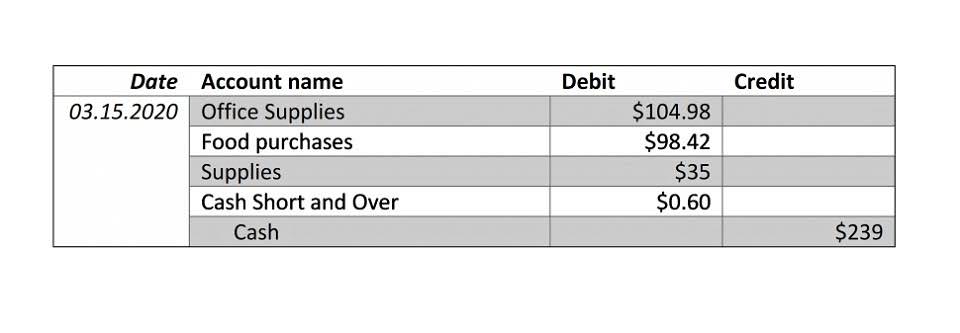
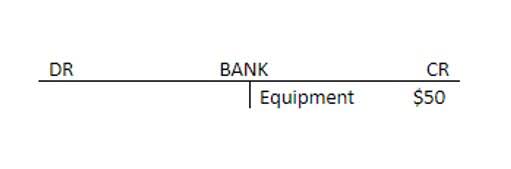
If the revenues earned are a main activity of the business, they are considered to be operating revenues. If the revenues come from a secondary activity, they are considered to be nonoperating revenues. For example, interest earned by a manufacturer on its investments is a nonoperating revenue. Interest earned by a bank is considered to be part of operating revenues. Debits and Credits are the words used to reflect this double-sided nature of financial transactions.
Core Components: Assets, Liabilities, and Equity
Managing accruals, deferred revenues, and multi-stage contracts requires sophisticated systems to ensure accuracy. The Shareholders’ Equity part of the equation is more complex than simply being the amount paid to the company by investors. It is actually their initial investment, plus any subsequent gains, minus any subsequent losses, minus any dividends or other withdrawals paid to the investors. The shareholders’ equity section tends to increase for larger businesses, since lenders want to see a large investment in a business before they will lend significant funds to an organization.
How do complex transactions impact the accounting equation?
The claims to the assets owned by a business entity are primarily divided into two types – the claims of creditors and the claims of owner of the business. In accounting, the claims of creditors are referred to as liabilities and the claims of owner are referred to as owner’s equity. Assets represent the resources owned retained earnings by a business that provide future economic benefits. Understanding assets is essential for assessing a company’s ability to generate revenue and sustain operations. Mastering the accounting equation involves recognizing the interplay between these three components. Any transaction that affects one part of the equation will invariably impact another, ensuring that the equation remains balanced.

The accounting equation is also called the balance sheet equation and the fundamental accounting equation. Other names for the balance sheet are statement of financial position or statement of financial condition. The company’s financial position is reflected as a snapshot of account balances from https://www.newbroadbandhyderabad.com/2021/10/13/blockchain-in-accounting-climbing-the-slope-of/ the balance sheet at the end of a reported accounting period. The clear-cut relationship between a company’s assets, liabilities, and equity is the backbone of the double-entry bookkeeping system. A company’s balance sheet is the source of its accounting equation numbers. Equity can be Shareholders’ Equity, Stockholders’ Equity, or Owner’s Equity.
C. Subjectivity in Expenses

Because it considers assets, liabilities, and equity (also known as shareholders’ equity or owner’s equity), this basic accounting equation is the basis of a business’s balance sheet. In double-entry accounting or bookkeeping, total debits on the left side must equal total credits on the right side. As a result of how each recorded accounting transaction affects the general ledger with balanced debits and credits, the financial statements are in balance. Moreover, equity is not static; it fluctuates with the ebbs and flows of business performance.
 Okking
 Thể thao
 Casino live
 Game bài
 Bắn cá
 Trò chơi điện tử
 Đá gà
Đá gà Xổ số
Xổ số Khuyến mãi
Tôi là 1 Dealer giỏi và có nhiều kinh nghiệm trong ngành cá cược online nên tôi rất hiểu tính chất của trò chơi. Nên tôi sẽ chia sẻ cho bạn những gì tôi biết.